Cinema Society · Product design and UX transformation
From a disconnected voucher website to a complete cinema experience
How I helped Network and Cinema Society take a new purchasing journey from initial prototype to production in two development sprints, with plans to reuse the experience across other commercial partnerships.
“World class.”
David, Cinema Society, describing the UX and design
- Role
- UX strategy, product design, prototyping, end-to-end journeys and collaborative delivery.
- Delivery
- About a week of initial prototyping, followed by two development sprints.
Outcomes
- 40% increase in members accessing the service
- 44% faster median time from account creation to first purchase
- 55% of new users purchasing within five minutes, up from 38%
- 44.2% year-on-year sales growth in October 2026
- 72% year-on-year commission growth in October 2026
- Planned reuse of the experience across other partners
The first three are the UX outcomes, measured before and after launch. The October growth had other causes too. The results section below explains how each was measured, and what it can and can't tell us.
The problem
Members of Network's schemes, such as Health Service Discounts, who wanted cinema vouchers clicked through to Cinema Society's own website. There they faced two buttons, to sign up or log in, and had to set up a new Cinema Society account, linked to their membership ID, before they could buy anything.
Many didn't realise they had left for a completely different site. Some then bypassed their scheme's site or app altogether and logged in directly with Cinema Society. It was confusing, and David at Cinema Society handled the support enquiries himself, sometimes at weekends.
The opportunity was a better way to buy, and fewer avoidable helpdesk enquiries.
My contribution
I recognised the opportunity and built an interactive prototype in about a week. I pitched it to Cinema Society, and they were enthusiastic about the direction straight away.
Then I worked directly with their team during development, extending the prototype and completing the UX as they built it. This was not a conventional design handover.
The shipped journey
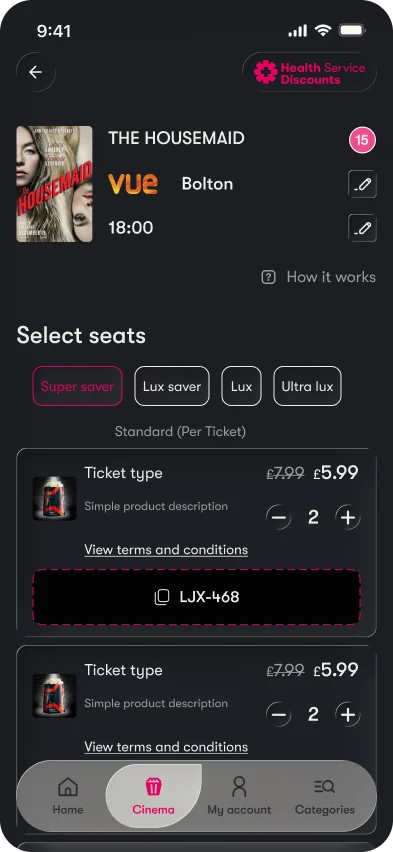
This is a multi-step purchasing and fulfilment journey, not a one-click checkout. Members can now:
- Find a participating cinema near them.
- Choose the cinema.
- Choose how many vouchers they need.
- Add optional food and drink packages.
- Pay.
- Reveal their vouchers and QR codes, ready to use.
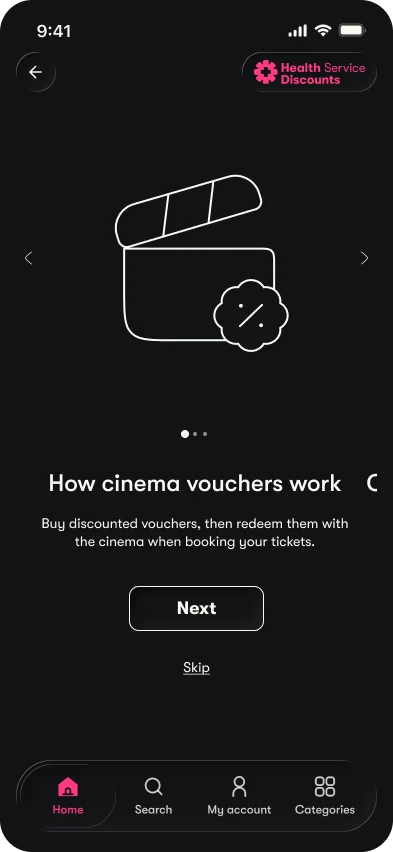
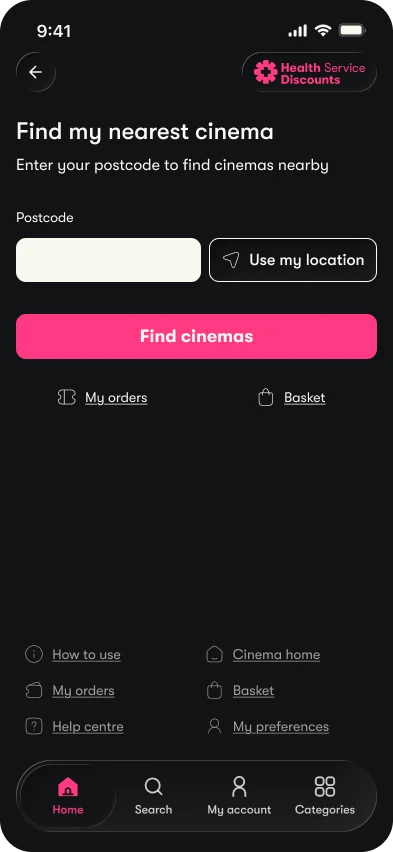
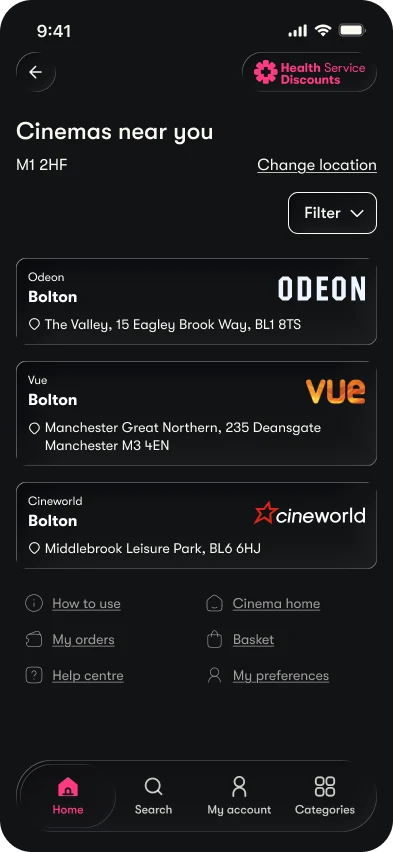
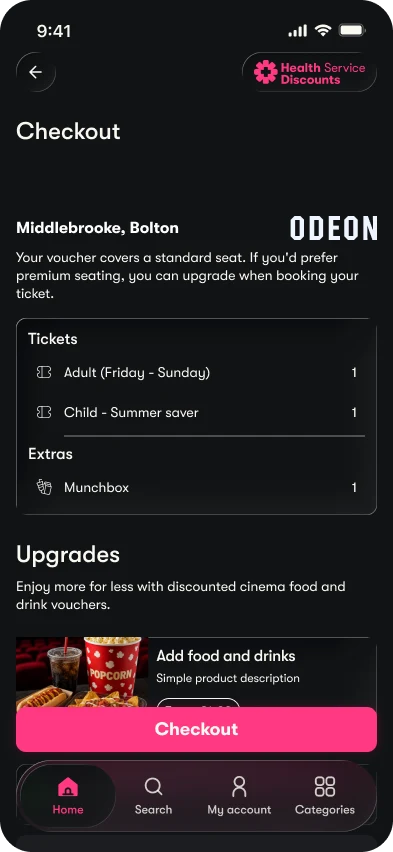
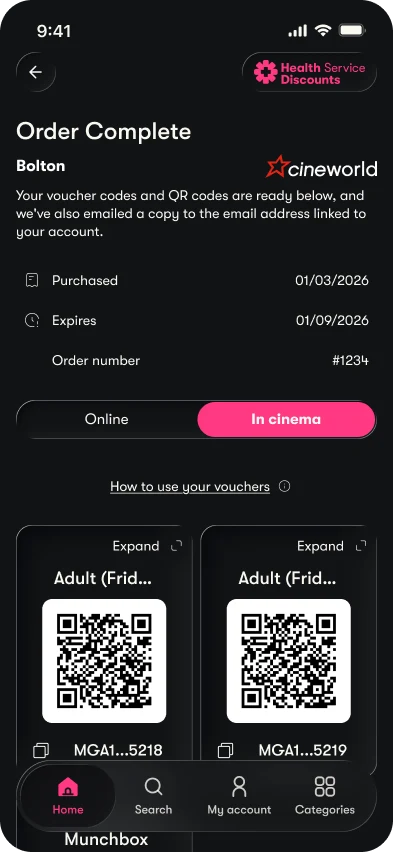
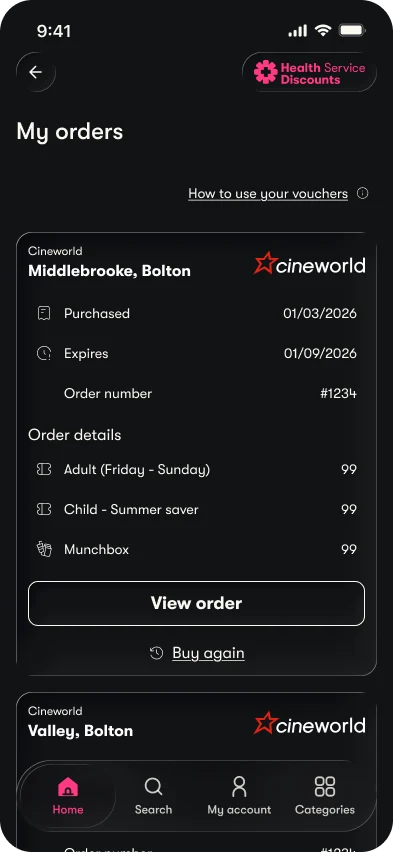
Clear instructions, guidance and FAQs appear at the stages where people need them.
Before
- Leave the scheme's site for Cinema Society's own website
- Choose between sign up and log in, and create a separate Cinema Society account
- Buy vouchers, often logging in directly with Cinema Society next time and bypassing the scheme
After
- Stay signed in with the scheme's own log-in (single sign-on), with no separate account
- Find a cinema, choose vouchers and add food and drink
- Pay, then reveal vouchers and QR codes in the same journey
Collaboration and delivery
Cinema Society committed its own developers to shipping the experience. The prototype took about a week, before development began.
We finished the remaining UX together during two development sprints, and the product shipped within that window. Their developers wrote the production code. My part was the prototype, the journeys and the design decisions, made with them while they built it.
Results
Better access and faster purchasing were the main UX goals.
- 40% more members accessed the service.
- The median time from creating an account to a first purchase fell by 44%.
- 55% of new users bought within five minutes, up from 38%.
We compared 14-day windows before and after launch, across three membership schemes, leaving out the switchover days. These are measured observations, not a controlled experiment. SSO also changed the point at which accounts are created, so the time-to-purchase figures are indicative.
The commercial results support that picture. In October 2026, sales grew 44.2% and commission 72% year on year. Film releases, the time of year and marketing all played a part, so the new experience is one reason for that growth, not the only one.
Beyond Network
Cinema Society sells its offer through many companies, membership organisations and employee benefits schemes. Following the Network project, it plans to reuse the experience with other partners.
That rollout hasn't happened yet. But a partner choosing to build its wider offer on this work is strong validation of the product direction, and shows how far the experience could go.
Future concept: film discovery
I also built a working prototype on a film API. It showed:
- Films currently showing.
- Upcoming releases.
- Nearby participating cinemas.
- Local cinema showtimes.
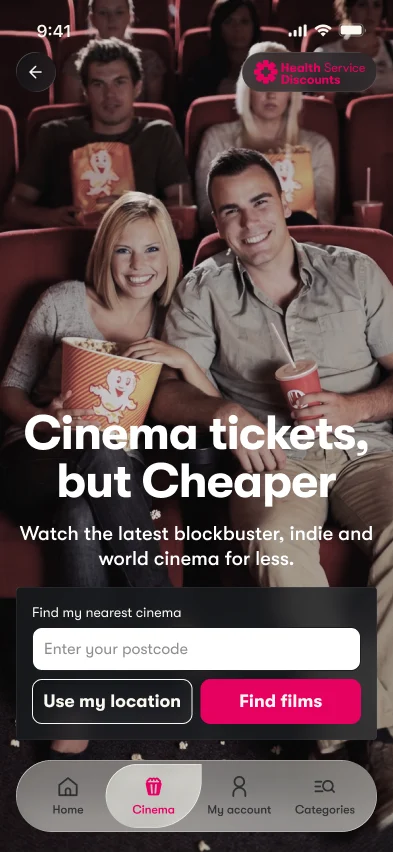
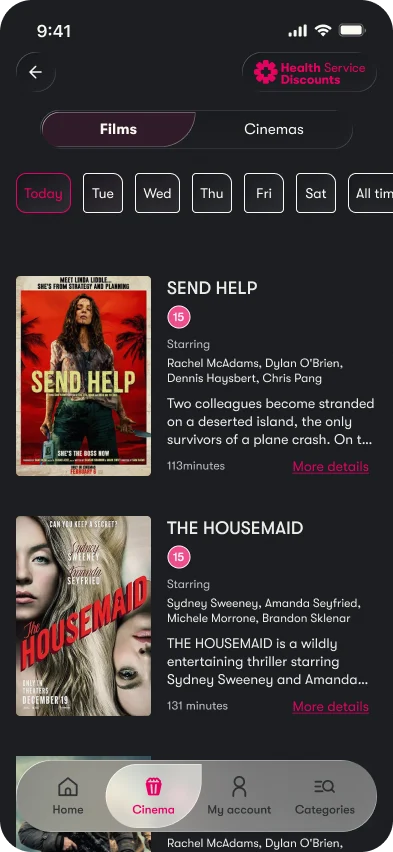
The idea is to make Cinema Society somewhere members come to discover films, rather than only returning after checking cinema listings somewhere else. It's a working product concept and a future opportunity. It has not shipped.
Good design doesn't just solve the problem in front of you. It creates opportunities you didn't have before.